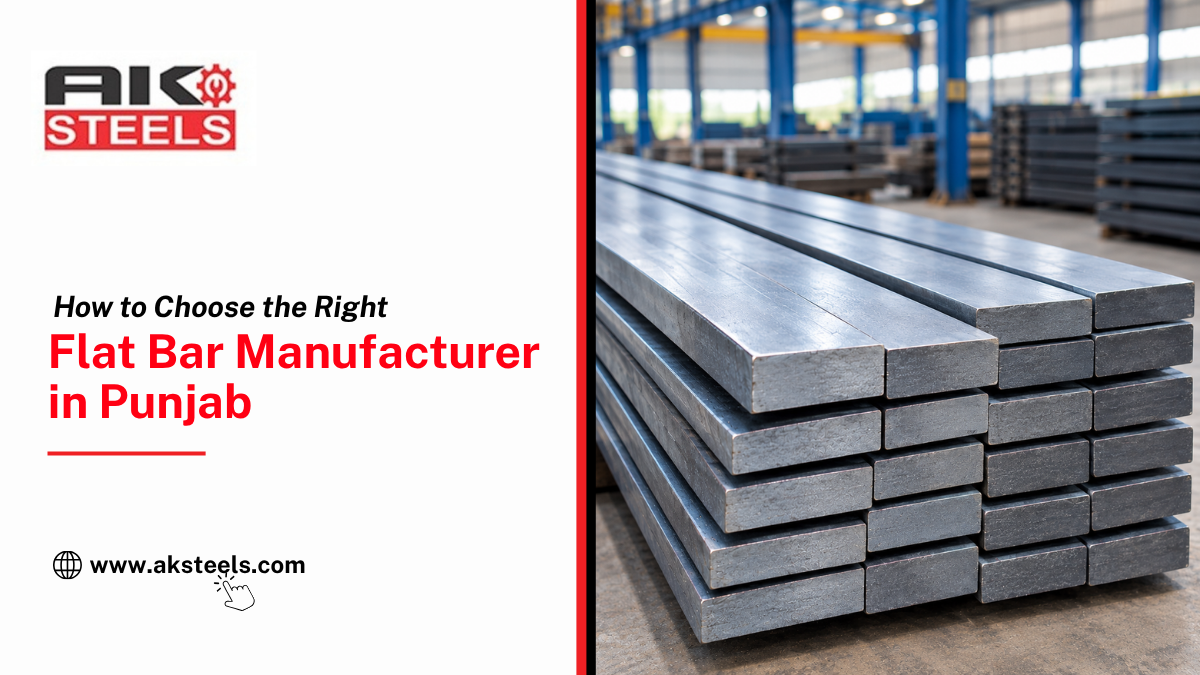
Flat bars are widely used across construction, engineering, fabrication, agriculture, machinery, and other industrial applications. Their simple rectangular shape makes them practical for components that require strength, durability, easy fabrication, and dimensional consistency. However, choosing the right flat bar is not simply about selecting a size. The appropriate grade, dimensions, application, and manufacturing quality all need to be considered.
For businesses and industries sourcing steel products, working with a reliable Flat Bar Manufacturer in Punjab can help ensure that the selected material meets the requirements of the intended application. AK Steels manufactures flat bars for a range of industrial and engineering requirements, with attention to material quality and consistent production.
Understanding Flat Bars and Their Industrial Role
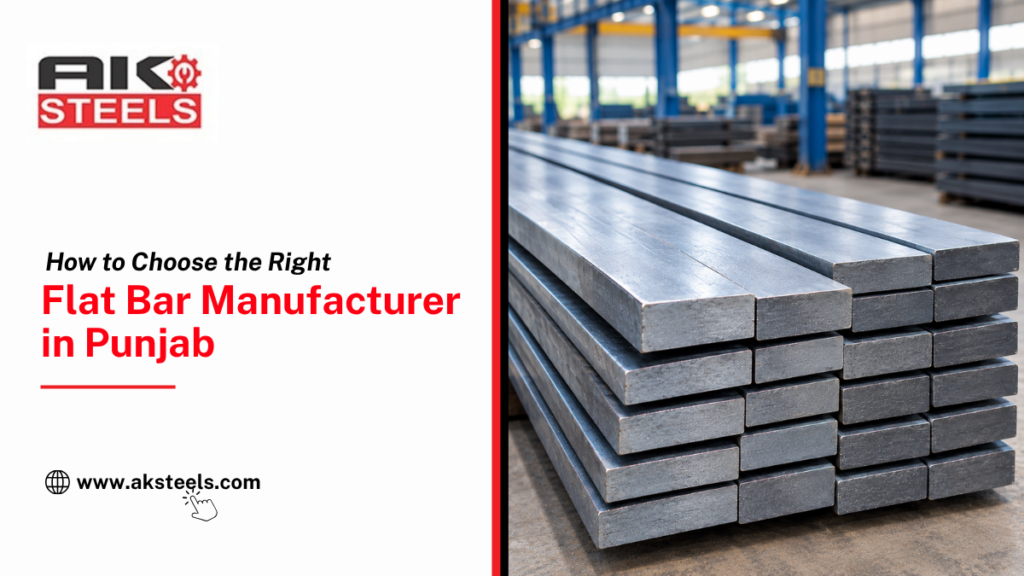
A flat bar is a solid steel section with a rectangular cross-section. It is available in different widths, thicknesses, and grades to suit different applications. Because of its flat and straightforward profile, it can be cut, fabricated, formed, drilled, and incorporated into various components.
Flat bars are commonly used for frames, supports, braces, agricultural equipment, machinery components, fabrication work, and other applications where a broad and solid steel section is required.
The selection of a flat bar should therefore be based on the actual working conditions and performance requirements rather than size alone.
Key Factors for Selecting the Right Flat Bar
Several factors should be evaluated before selecting a flat bar for a project or industrial requirement.
Size and Dimensions
Width and thickness are important considerations because they directly relate to the physical requirements of the component. The required dimensions depend on the design, load conditions, fabrication method, and available space within the application.
Choosing the appropriate dimensions can help ensure that the flat bar fits correctly and performs as required.
Grade and Material Properties
Different applications may require different steel grades. The grade should be selected according to the required mechanical properties and intended use.
For example, applications involving wear, impact, spring action, or specialized industrial requirements may require a particular grade rather than a general-purpose steel section.
Application Requirements
The intended application should always be considered before purchasing a flat bar. Construction components, agricultural machinery, hand tools, spring applications, and engineering components may have different material requirements.
Understanding the operating environment and function of the component helps in selecting a suitable product.
Strength and Durability
The flat bar should have properties appropriate for the stresses and conditions it will experience during service. Depending on the application, factors such as strength, toughness, wear resistance, and durability may need to be considered.
Manufacturing Quality
Consistent dimensions and material quality are important when flat bars are used for fabrication and industrial production. Working with an experienced manufacturer can help businesses source steel products according to their specific requirements.
Choosing Flat Bars for Construction Applications
Flat bars are frequently incorporated into construction and structural fabrication work. They can be used for supports, braces, frames, reinforcement-related components, gates, and other fabricated structures.
When selecting a Flat Bar Manufacturer in India for construction, dimensions, grade, expected loading conditions, fabrication requirements, and environmental conditions should be considered. The appropriate product can help support reliable fabrication and long-term service performance.
For projects involving multiple fabricated components, consistent dimensions are particularly important because they can simplify cutting, fitting, welding, and assembly.
Selecting Flat Bars for Engineering and Fabrication
Engineering and fabrication applications often require steel sections that can be processed into specific components. Flat bars can be cut and fabricated into frames, brackets, supports, machine components, and other parts.
For these applications, the selection process should consider the required dimensions, steel grade, fabrication method, and expected service conditions. A suitable flat bar can provide the necessary balance of strength, workability, and durability for the finished component.
Fabricators should also consider whether the selected material is appropriate for processes such as cutting, drilling, machining, bending, or welding.
Flat Bars for Agricultural and Machinery Applications
Agricultural equipment and machinery often operate under demanding working conditions. Components may experience repeated loading, impact, friction, or wear, making material selection important.
Flat bars are used in various agricultural and machinery-related components because their solid rectangular profile can be adapted to different designs.
Depending on the application, specialized grades may be selected to meet particular performance requirements. For example, agricultural and industrial components may require steel with suitable wear or strength characteristics.
Why Flat Bar Grade Matters
Steel grade is an important part of flat bar selection because different grades are developed for different material requirements.
A general-purpose application may require a different grade from a component exposed to repeated stress, wear, or impact. Selecting a grade based on the actual application helps ensure that the material is appropriate for its intended service conditions.
AK Steels supplies flat bars in grades suited to various applications, including Boron Steel, 20MnCrS, SUP 9, SUP 9A, SUP 11, SUP 11A, EN 45, 31CrV3, C38, C40, and C45.
The appropriate grade should always be selected according to the technical requirements of the specific component or application.
How Size and Thickness Affect Flat Bar Selection
Flat bars are available in different dimensions to accommodate different design and fabrication requirements. Width and thickness influence how the material can be incorporated into a component.
A thinner flat bar may be suitable for certain fabrication requirements, while heavier sections may be required where greater material thickness is part of the design.
Before placing an order, buyers should confirm the required width, thickness, length, grade, and quantity. Accurate dimensional requirements can also help reduce material wastage during fabrication.
What to Check Before Buying From a Flat Bar Manufacturer
Choosing a Flat Bar Manufacturer in India is an important step when sourcing flat bars for commercial or industrial use. Before placing an order, buyers can consider several factors.
First, check whether the manufacturer offers the required grades and dimensions. The manufacturer’s production capabilities should match the requirements of the application.
Second, consider quality control and material verification practices. Consistent production is important when steel products are being used across repeated manufacturing processes.
Third, evaluate the manufacturer’s ability to handle regular supply requirements. For industrial buyers, dependable production and dispatch can be as important as the product itself.
Finally, clear communication about grade, size, quantity, and application requirements can help ensure that the supplied material matches the intended use.
Finding a Reliable Flat Bar Manufacturer in Punjab
Punjab has an established steel manufacturing and industrial ecosystem, making the region an important sourcing location for steel products.
When looking for a Flat Bar Manufacturer in Punjab, buyers should look beyond price alone. Manufacturing capability, product range, quality practices, technical understanding, and supply consistency are important factors to consider.
AK Steels, based in Mandi Gobindgarh, Punjab, manufactures steel products for construction, engineering, fabrication, agricultural, and industrial requirements. Its flat bar range includes different grades and applications, allowing customers to select products according to their specific requirements.
Businesses can explore the AK Steels Flat Bar range to review product information and determine which option is appropriate for their application.
Why Choose AK Steels?
AK Steels focuses on manufacturing steel products for a variety of industrial and engineering applications. Its flat bar range is designed to serve requirements across fabrication, agriculture, machinery, construction, and other sectors.
The selection of appropriate grades and dimensions allows customers to source flat bars according to their application requirements. Consistent manufacturing and quality-focused processes are also important when supplying steel products for demanding industrial use.
For businesses looking for a Flat Bar Manufacturer in India, understanding the product specifications and discussing the intended application can help identify a suitable flat bar solution.
Frequently Asked Questions About Choosing Flat Bars
How do I choose the right flat bar?
Consider the required dimensions, steel grade, application, strength requirements, fabrication process, and expected service conditions before selecting a flat bar.
Which flat bar is suitable for industrial applications?
The suitable Flat Bar Manufacturer in India depends on the specific industrial application. Factors such as grade, dimensions, strength, wear requirements, and operating conditions should be evaluated before selection.
Why does flat bar grade matter?
Different steel grades have different material properties and are suited to different applications. Selecting the appropriate grade helps ensure that the material meets the requirements of the intended component.
How do size and thickness affect flat bar selection?
Width and thickness determine how the flat bar fits into a design and contribute to its suitability for particular fabrication and structural requirements. The correct dimensions should be selected according to the application.
How can I find a reliable Flat Bar Manufacturer in Punjab?
Look for a manufacturer with suitable production capabilities, required grades and dimensions, quality-focused processes, and the ability to meet your supply requirements consistently.
Conclusion
Choosing the right flat bar requires more than selecting a rectangular steel section. The application, dimensions, grade, strength requirements, fabrication process, and manufacturing quality should all be considered before purchasing.
Whether the requirement is for construction, engineering, fabrication, agriculture, machinery, or industrial components, selecting the appropriate steel product can support reliable performance and efficient manufacturing.
For businesses sourcing flat bars in Punjab, working with an experienced Flat Bar Manufacturer in Punjab can make the procurement process more straightforward. AK Steels provides flat bar products for a range of applications and offers different grades to meet varying industrial requirements.