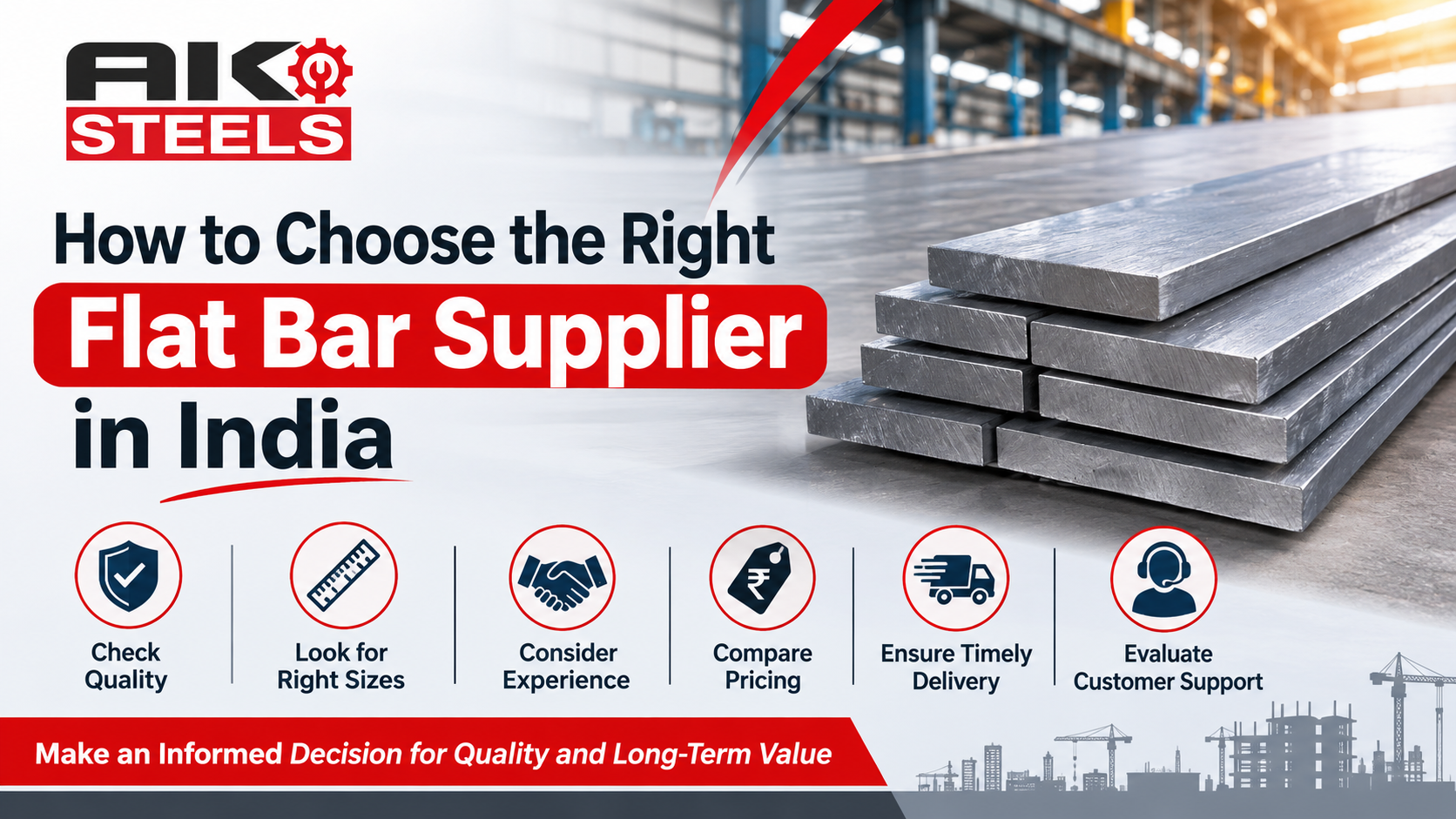
Flat bars are among the most widely used steel products in construction, engineering, infrastructure, fabrication, and manufacturing. Their versatility, strength, and ease of fabrication make them suitable for a wide range of industrial and structural applications. However, selecting the right Flat Bar Supplier in India is essential to ensure consistent product quality, reliable delivery, and long-term value.
With numerous steel suppliers and manufacturers across the Indian market, buyers should evaluate several factors before deciding where to buy. From material quality and dimensional accuracy to pricing, product availability, and customer support, every aspect plays an important role in choosing a dependable supplier.
In this guide, we will discuss the key factors to consider when selecting a flat bar supplier and how businesses can make an informed sourcing decision.
What Are Steel Flat Bars?
Steel flat bars are long, rectangular-shaped metal products with a flat surface and uniform thickness. They are generally available in different widths, thicknesses, lengths, and material grades to meet specific industrial requirements.
These products are manufactured through hot rolling or other steel processing methods, depending on the required specifications and applications.
Steel flat bars are valued for their strength, durability, versatility, and ease of cutting, welding, drilling, and machining. They are commonly used in structural frameworks, fabrication work, machinery components, industrial equipment, and infrastructure projects.
Why Is Choosing the Right Flat Bar Supplier Important?
The quality of steel materials directly influences the strength, performance, and durability of finished products. Working with an experienced and reliable flat bar supplier helps businesses maintain consistent production standards and avoid unnecessary material-related issues.
Here are some important reasons to choose your supplier carefully:
- Consistent Material Quality: Reliable suppliers provide products that meet the required material specifications and quality standards.
- Accurate Dimensions: Proper thickness, width, and length help ensure smooth fabrication and installation.
- Reliable Product Availability: A dependable supplier can help maintain a consistent supply for ongoing projects.
- Competitive Pricing: Transparent pricing helps businesses manage procurement costs effectively.
- Timely Delivery: On-time material supply reduces production delays and project interruptions.
- Technical Assistance: Experienced suppliers can help buyers select suitable flat bars according to their applications.
7 Important Factors to Consider When Choosing a Flat Bar Supplier in India
1. Check Product Quality and Material Standards
Product quality should be the first consideration when selecting a steel flat bar supplier. Always check whether the supplied material meets the required specifications, grade, and applicable quality standards.
Depending on the application, buyers should evaluate factors such as material composition, surface finish, strength, and dimensional consistency.
Ask the supplier about available material test certificates and quality inspection procedures where applicable. This helps verify whether the supplied steel matches your project requirements.
2. Evaluate Available Sizes and Specifications
Different industries require flat bars in different sizes and dimensions. Before finalizing a supplier, check whether they offer the required range of widths, thicknesses, lengths, and material grades.
A supplier with a suitable product range can help businesses source materials according to their specific fabrication, construction, and manufacturing needs.
It is also important to confirm dimensional tolerances and whether customized cutting or processing services are available.
3. Consider Industry Experience and Market Reputation
Experience is another important factor when choosing a flat bar supplier in India. Suppliers with established industry experience may have a better understanding of steel specifications, customer requirements, and supply chain operations.
Before placing an order, review the supplier’s business background, customer feedback, product information, and market presence.
A professional supplier should be able to provide clear product details and respond confidently to technical and commercial queries.
4. Compare Pricing and Overall Value
Price is an important part of steel procurement, but choosing a supplier based only on the lowest quotation may not always be beneficial.
Compare quotations from different suppliers while considering:
- Steel grade and material specifications
- Product dimensions and weight
- Manufacturing and processing quality
- Transportation and delivery charges
- Applicable taxes and additional costs
- Order quantity and payment terms
The objective should be to find a supplier that offers a suitable balance between product quality, pricing, and service reliability.
5. Check Stock Availability and Supply Capacity
For manufacturers, fabricators, and construction companies, uninterrupted material availability is essential.
Before selecting a supplier, confirm whether the required flat bar sizes and grades are readily available. Also, discuss their ability to handle bulk orders and recurring supply requirements.
A supplier with reliable inventory management and an established distribution network can make procurement easier and help businesses manage their material requirements efficiently.
6. Verify Delivery Network and Logistics Support
Timely delivery is particularly important for industrial projects where production schedules depend on the availability of raw materials.
Check the supplier’s delivery coverage, transportation arrangements, estimated dispatch timelines, and packaging practices.
For buyers sourcing steel from different regions of India, it is beneficial to work with a supplier capable of coordinating deliveries efficiently and providing clear shipment updates.
7. Evaluate Customer Support and Business Transparency
Good communication helps build a long-term relationship between buyers and suppliers.
A reliable flat bar supplier should provide accurate quotations, clear product specifications, realistic delivery commitments, and prompt responses to customer queries.
Transparent business practices also help avoid misunderstandings related to pricing, material quality, order quantities, and delivery schedules.
Common Industrial Applications of Steel Flat Bars
Steel flat bars are used across several industries because of their versatility and fabrication-friendly properties.
Some common applications include:
Construction and Infrastructure: Used in structural supports, brackets, frames, reinforcement components, and general fabrication work.
Engineering and Manufacturing: Suitable for machinery components, equipment frames, machine parts, and industrial assemblies.
Automotive Industry: Used in selected vehicle components, support structures, and fabrication applications.
Fabrication Industry: Commonly used for gates, railings, frames, supports, and customized metal structures.
Agricultural Equipment: Used in manufacturing and repairing agricultural machinery and equipment components.
Industrial Maintenance: Suitable for replacement parts, structural repairs, and general maintenance requirements.
The appropriate flat bar grade and dimensions should always be selected according to the intended application and required mechanical properties.
Questions to Ask Before Finalizing a Flat Bar Supplier
Before placing an order, buyers should clarify a few important details to avoid procurement issues.
- What material grades and flat bar sizes are available?
- Can the supplier provide material test certificates?
- What are the applicable dimensional tolerances?
- Is bulk ordering available?
- What is the expected delivery timeline?
- Are customized cutting and processing services offered?
- What are the payment terms and return policies?
Getting clear answers to these questions can help businesses compare suppliers and make better purchasing decisions.
Why Choose a Reliable Flat Bar Supplier in India?
India has a well-established steel industry serving domestic and international markets. Businesses can find suppliers offering different steel products, specifications, and distribution services.
However, the right supplier is not simply the one offering the lowest price. It is the one that understands your material requirements, maintains product consistency, communicates transparently, and supports your procurement needs.
Whether you are purchasing steel flat bars for construction, fabrication, engineering, or manufacturing, selecting a dependable supplier can contribute to better operational efficiency and project execution.
Conclusion
Choosing the right Flat Bar Supplier in India requires careful evaluation of product quality, material specifications, pricing, availability, delivery capabilities, and customer service.
By comparing these factors before placing an order, businesses can reduce procurement risks, maintain material consistency, and establish reliable supplier relationships.
Always prioritize quality, transparency, and long-term value when sourcing steel flat bars for your industrial or commercial requirements.
Frequently Asked Questions (FAQs)
1. What is a steel flat bar?
A steel flat bar is a long, rectangular-shaped steel product with a flat surface and uniform thickness. It is commonly used in construction, fabrication, engineering, and manufacturing applications.
2. Where are steel flat bars commonly used?
Steel flat bars are used in construction frameworks, machinery, fabrication work, industrial equipment, automotive components, agricultural machinery, and infrastructure projects.
3. How do I choose the best flat bar supplier in India?
Consider product quality, available sizes, material grades, industry experience, pricing, stock availability, delivery services, and customer support before selecting a supplier.
4. What sizes are available in steel flat bars?
Steel flat bars are available in different widths, thicknesses, and lengths. Availability depends on the supplier, manufacturing process, and material specifications.
5. Which factors affect the price of steel flat bars?
The price generally depends on steel grade, dimensions, weight, prevailing raw material prices, order quantity, processing requirements, and transportation costs.
6. Are steel flat bars suitable for fabrication?
Yes. Steel flat bars are widely used in fabrication because they can be cut, welded, drilled, and machined according to project requirements, depending on the material grade.
7. Can I purchase steel flat bars in bulk in India?
Yes. Many steel suppliers serve bulk industrial and commercial requirements. Buyers should confirm stock availability, order quantities, pricing, and delivery arrangements before placing an order.