Steel is one of the most important materials used in modern construction. From residential buildings and commercial complexes to industrial structures and infrastructure projects, steel provides the strength, stability, and durability required for long-lasting construction.
However, choosing the right steel is not simply about selecting an available product. Different construction projects have different structural requirements, and steel quality, grade, dimensions, and properties can directly affect a structure’s safety and performance.
Whether you are a contractor, builder, engineer, or procurement professional, understanding how to select suitable steel materials can help you make better purchasing decisions.
1. Understand the Requirements of Your Project
Before purchasing steel, identify the specific requirements of your construction project. The type of structure, expected load, environmental conditions, and application all influence the selection.
For example:
- Residential buildings require steel materials suitable for structural stability and reinforcement.
- Commercial buildings may require materials designed to support larger structural loads.
- Industrial structures often require steel with specific strength and performance characteristics.
- Infrastructure projects may require materials that can withstand demanding environmental and operational conditions.
Understanding these requirements helps narrow down the appropriate steel specifications.
2. Check the Steel Grade and Specifications
Steel grades indicate important mechanical and chemical properties of the material. These properties help determine whether a particular steel product is suitable for a specific application.
Before finalizing a purchase, review:
- Yield strength
- Tensile strength
- Chemical composition
- Material dimensions
- Applicable industry standards
- Product certification and test documentation
Always match the steel specifications with the requirements provided by your project engineer or structural designer.
3. Evaluate Steel Quality and Durability
Steel quality plays an important role in the long-term performance of a structure. Poor-quality materials can create problems during fabrication, installation, and actual use.
Consider the following factors when evaluating steel:
Material consistency: Check whether the product maintains consistent dimensions and material properties.
Surface condition: Inspect the material for visible defects, excessive corrosion, cracks, or other irregularities.
Testing and certification: Request relevant quality certificates and material test reports where applicable.
Manufacturing standards: Confirm that the steel meets the specifications and standards required for your application.
Choosing properly tested materials can help reduce quality-related issues during construction.
4. Choose the Right Steel Bar for Your Application
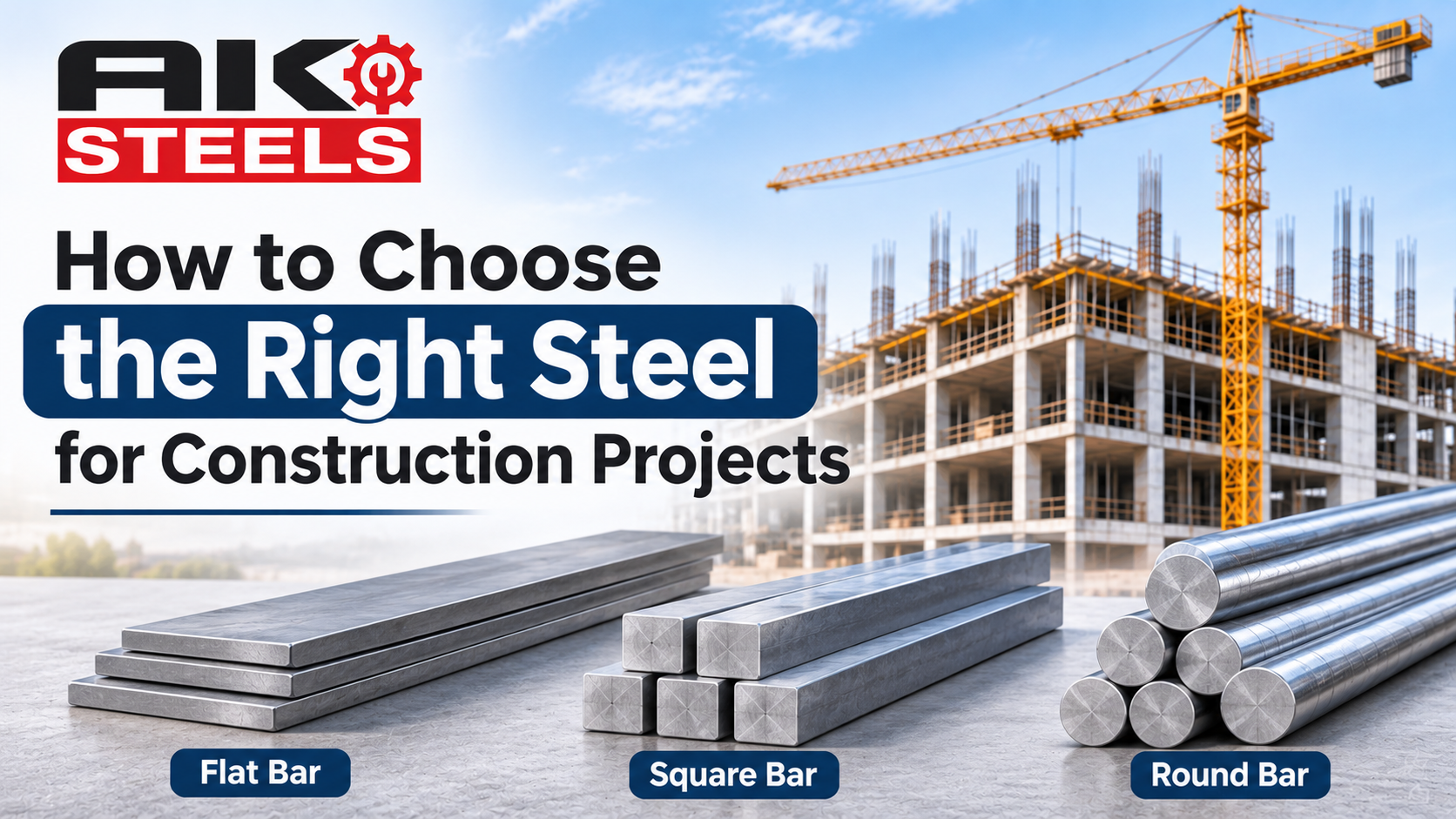
Steel bars are available in different shapes and sizes to meet the requirements of construction, fabrication, engineering, and industrial applications. Selecting the right type depends on the intended use, design specifications, and required material properties.
AK Steels offers three main types of steel bars:
Flat Bars
Steel flat bars have a rectangular cross-section and are widely used in fabrication, manufacturing, support structures, brackets, frames, and general engineering applications. Their flat surface makes them suitable for cutting, welding, drilling, and other fabrication processes.
Round Bars
Steel round bars feature a circular cross-section and are commonly used in machining, manufacturing, shafts, fasteners, engineering components, and fabrication work. They are available in different diameters to suit various industrial requirements.
Square Bars
Steel square bars have a square cross-section and are used in fabrication, engineering components, grills, frames, supports, and other industrial applications. Their uniform shape makes them suitable for applications requiring consistent dimensions and strength.
Before selecting any steel bar, consider its dimensions, grade, mechanical properties, and suitability for the intended application. Always verify the material specifications against your project requirements.
5. Consider Corrosion Resistance
Environmental conditions can affect the durability of steel. Structures exposed to moisture, humidity, chemicals, or outdoor conditions may require additional corrosion protection.
Depending on the application, suitable protective measures may include:
- Protective coatings
- Galvanization
- Painting systems
- Regular inspection and maintenance
Selecting appropriate corrosion protection can help extend the service life of steel structures.
6. Compare Price Along with Quality
Price is an important factor when purchasing steel, especially for large construction projects. However, choosing materials based only on the lowest quotation may not always be economical.
Compare suppliers based on:
- Product specifications
- Material quality
- Required dimensions
- Testing documentation
- Delivery timelines
- Consistency of supply
- Overall value
A reliable purchasing decision should balance material quality, project requirements, and budget.
7. Choose a Reliable Steel Supplier
Selecting the right supplier is just as important as selecting the right material. A dependable steel supplier should be able to provide accurate product information, consistent quality, and professional support.
Before placing an order, consider checking the supplier’s product range, business experience, material specifications, documentation, and delivery capabilities.
Working with a reliable supplier can make material procurement more organized and help avoid unnecessary delays.
Why Is Choosing the Right Steel Important?
The right steel selection contributes to several important aspects of a construction project:
- Structural performance: Helps meet the required load-bearing specifications.
- Durability: Supports long-term performance under suitable operating conditions.
- Safety: Ensures materials are selected according to engineering requirements.
- Cost management: Helps minimize material wastage and avoid unnecessary replacements.
- Project efficiency: Supports smoother fabrication, installation, and construction processes.
Frequently Asked Questions
1. Which steel is best for construction?
The best steel depends on the project’s structural design, load requirements, environmental conditions, and applicable engineering standards. There is no single steel product suitable for every construction application.
2. What factors should be checked before purchasing steel?
Check the steel grade, dimensions, mechanical properties, chemical composition, applicable standards, quality certificates, and suitability for the intended application.
3. Why is steel quality important in construction?
Steel quality affects structural performance, durability, fabrication, and safety. Using materials that meet the required specifications helps ensure reliable construction.
What are the common types of steel bars?
Common types of steel bars include flat bars, round bars, and square bars. Each type has different dimensions, shapes, and applications across fabrication, construction, manufacturing, and engineering industries.
5. How can I identify a reliable steel supplier?
Look for suppliers who provide clear product specifications, quality documentation, consistent material supply, transparent communication, and dependable delivery support.
Conclusion
Choosing the right steel for construction projects requires careful consideration of material specifications, strength, durability, quality, and application requirements. By evaluating these factors and working with a dependable supplier, builders and procurement professionals can make informed decisions that support better construction outcomes.
For steel procurement, always prioritize verified material specifications and products that meet the technical requirements of your project.